Cladding scaffolding
Cladding & Sheeting
- Full wrap & sheeting
- Debris netting
- Dust containment
The short version
What cladding access actually involves
Scaffold cladding, sheeting and shrink-wrap that keep weather, dust and debris where they belong — and keep a working site looking tidy from the street.
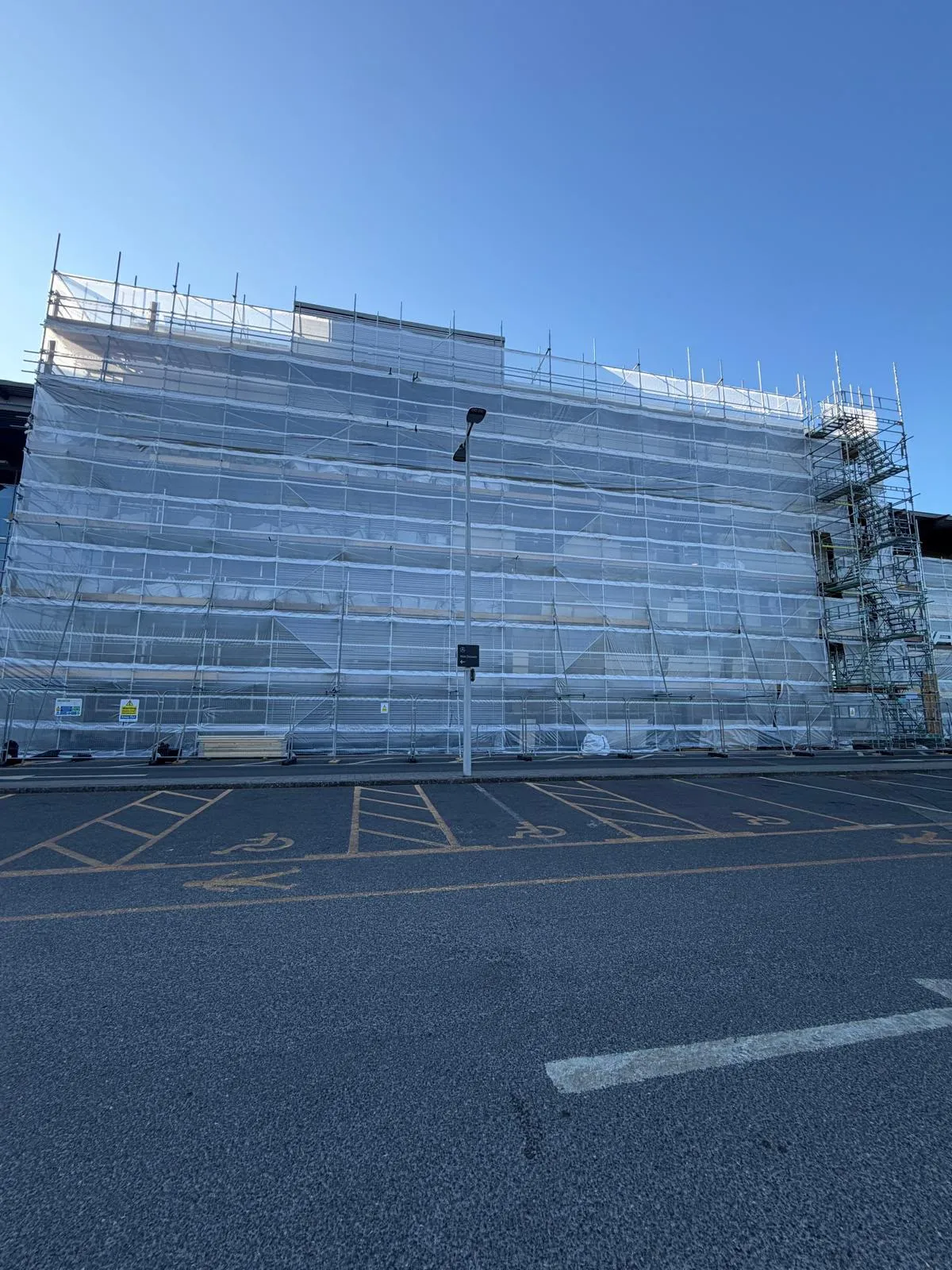
Cladding a scaffold changes what it is for. Sheeting and shrink-wrap hold weather off the elevation so trades can work and finishes can cure; debris netting keeps material inside the structure; and a wrapped scaffold hides a working site from the street. It also turns the frame into a sail, which is why the scaffold beneath cladding has to be designed and tied for it from the start.
- Full wrap & sheeting
- Debris netting
- Dust containment
- Branded screens
Why it is done this way
What you get from Alpine
-
Work carries on in the weather
A sheeted elevation keeps rain and wind off the working face, which matters most for render, paint and pointing that need dry conditions to cure.
-
Debris stays on site
Netting and sheeting contain dust and falling material — usually the condition attached to working over a pavement, a car park or a neighbour.
-
Tied for the wind it creates
Cladding multiplies wind load on a scaffold. The tie schedule is designed for the clad structure, not added as an afterthought once it is up.
-
A tidy frontage
On a shopfront or a public building, a wrapped scaffold hides the work and can carry a clean screen rather than exposed tube and boards.
In the price
What the quote covers
- Sheeting, debris netting or shrink-wrap to suit the work behind it
- Scaffold design and tie schedule set for the wind loading cladding creates
- Containment for dust and debris on occupied and public-facing sites
- Weather protection so external finishes can go on and cure
- Inspection of the cladding and fixings through the hire period
- Removal and disposal on dismantle
Anything outside this is priced and agreed before it happens — never added afterwards.
Common questions
Before you book
The questions that come up on nearly every cladding job in Stevenage, Cambridge and across Hertfordshire. All FAQs
-
What is the difference between sheeting, netting and shrink-wrap?
Debris netting contains falling material and lets air through. Sheeting — typically a reinforced polythene such as Monarflex — holds weather off the elevation as well. Shrink-wrap is heat-fitted to the frame for the tightest, most weatherproof and tidiest finish, and is the usual choice on public-facing frontages.
-
Does cladding a scaffold affect its design?
Considerably. Cladding turns the frame into a sail, so the tie schedule and bracing are designed for the clad structure from the start rather than added once it is standing. It is the single most common failure point on scaffolds that are sheeted as an afterthought.
-
Will sheeting let my trades work through bad weather?
That is the main reason for it. A sheeted elevation keeps rain and wind off the working face, which matters most for render, paint and pointing that need dry conditions to go on and cure.
-
Can scaffold sheeting be branded?
Printed and branded screens can be fitted where the frontage is public-facing — worth discussing at survey, since it affects the wind loading and therefore the tie design.
-
Do you remove and dispose of the sheeting afterwards?
Yes, removal and disposal are part of the dismantle and included in the original written price.
-
Do I need a permit or licence?
If the scaffold stands on or over public land — a pavement, a verge or a road — the local authority requires a licence. We apply for it, deal with the council and build to whatever conditions they attach, such as lighting, hoarding or a protected pedestrian route. If the scaffold sits entirely on private property, no licence is normally needed. We will tell you which applies at the survey.
-
How long does it take to put up?
Most domestic scaffolds go up in a day, and many in a few hours. Larger commercial structures, temporary roofs and anything requiring a bespoke design take longer, and phased jobs are erected in sections to suit the programme. You get a date at the point of quoting, and the crew arrives on it.
In the field
Recent cladding jobs
Our own photographs — tap any of them to see it full size, or browse the whole gallery.
Also from Alpine
Other services
- Domestic Scaffolding Access for work on houses, bungalows and flats. Read more
- Commercial Scaffolding Scaffolding for shops, offices, schools and sites that have to keep running while the work goes on. Read more
- Industrial Scaffolding Heavier-duty access for warehouses, plant and industrial units, designed around load, height and the plant that still has to move underneath it. Read more
- Temporary Roofing A weatherproof roof over the whole structure, so a re-roof, a loft conversion or fire and flood repairs can carry on whatever the forecast does. Read more
Free survey, written price 5.0 on Google · CHAS accredited